
Organic vs Paid Social Media: Which Is Better?
Social media has become an essential part of digital marketing, but businesses often struggle to decide where to focus their efforts. Understanding organic vs paid social media can help you choose the right strategy based on your goals, budget, and audience.
While both approaches aim to increase visibility and engagement, they work in very different ways. Organic social media focuses on building a genuine audience through consistent content, while paid social media uses advertising to reach specific audiences faster.
What Is Organic Social Media?

Organic social media refers to content that you publish without paying to promote it. This includes Instagram posts, Reels, Stories, carousels, Facebook posts, LinkedIn content, and other forms of social media content.
The main advantage of organic marketing is that it helps businesses build long-term relationships with their audience. Consistent and valuable content can improve brand awareness, encourage engagement, and create a loyal community.
However, organic reach can take time. Social media algorithms determine how many people see your content, meaning even high-quality posts may not always reach a large audience.
Organic social media works particularly well for businesses that want to establish their brand personality, educate their audience, and create consistent engagement.
What Is Paid Social Media?

Paid social media involves investing money to display advertisements to a targeted audience. Platforms such as Instagram, Facebook, LinkedIn, and other social networks allow businesses to target users based on factors such as location, interests, demographics, and online behaviour.
One of the biggest advantages of paid advertising is speed. Instead of waiting for content to gain organic reach, businesses can put their message in front of a specific audience almost immediately.
Paid campaigns can also be useful for generating leads, driving website traffic, promoting products, increasing sales, or retargeting people who have already interacted with your brand.
However, paid advertising requires a budget and careful optimisation. Simply spending money on an advertisement does not guarantee results. Effective targeting, creative content, compelling copy, and continuous monitoring are all important.
Organic vs Paid Social Media: Which One Should You Choose?
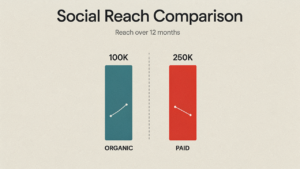
The right choice depends on what your business wants to achieve.
| Organic Social Media | Paid Social Media |
|---|---|
| Builds long-term relationships | Provides faster reach |
| Usually requires more time | Requires an advertising budget |
| Focuses on community building | Focuses on targeted promotion |
| Helps establish brand personality | Can generate leads and conversions |
| Reach depends on algorithms | Reach can be controlled through targeting |
For most businesses, the best approach isn’t choosing one over the other. Combining both strategies can create a stronger social media presence.
You can use organic content to build trust and understand what your audience responds to, then use paid campaigns to amplify high-performing content or reach new potential customers.
How to Create a Balanced Social Media Strategy

Start by defining your main objective. If your priority is brand awareness and community building, invest time in consistent organic content. If you need quick traffic, leads, or product sales, paid campaigns can support those goals.
Track important metrics such as engagement, reach, website visits, leads, and conversions. Over time, these insights can help you understand which type of content and advertising delivers the best results.
Summary
Understanding organic vs paid social media can help businesses make smarter marketing decisions. Organic content builds relationships and brand credibility, while paid campaigns provide targeted reach and faster results.
If you need help creating a social media strategy that combines organic content with paid advertising, working with a digital marketing strategist in Kannur can help you build a strategy around your specific business goals, audience, and budget.